Mother touch toys
Square Block Jigsaw Puzzle – Wooden Brain Teaser for Kids
Square Block Jigsaw Puzzle – Wooden Brain Teaser for Kids
Couldn't load pickup availability
Square Block Jigsaw Puzzle
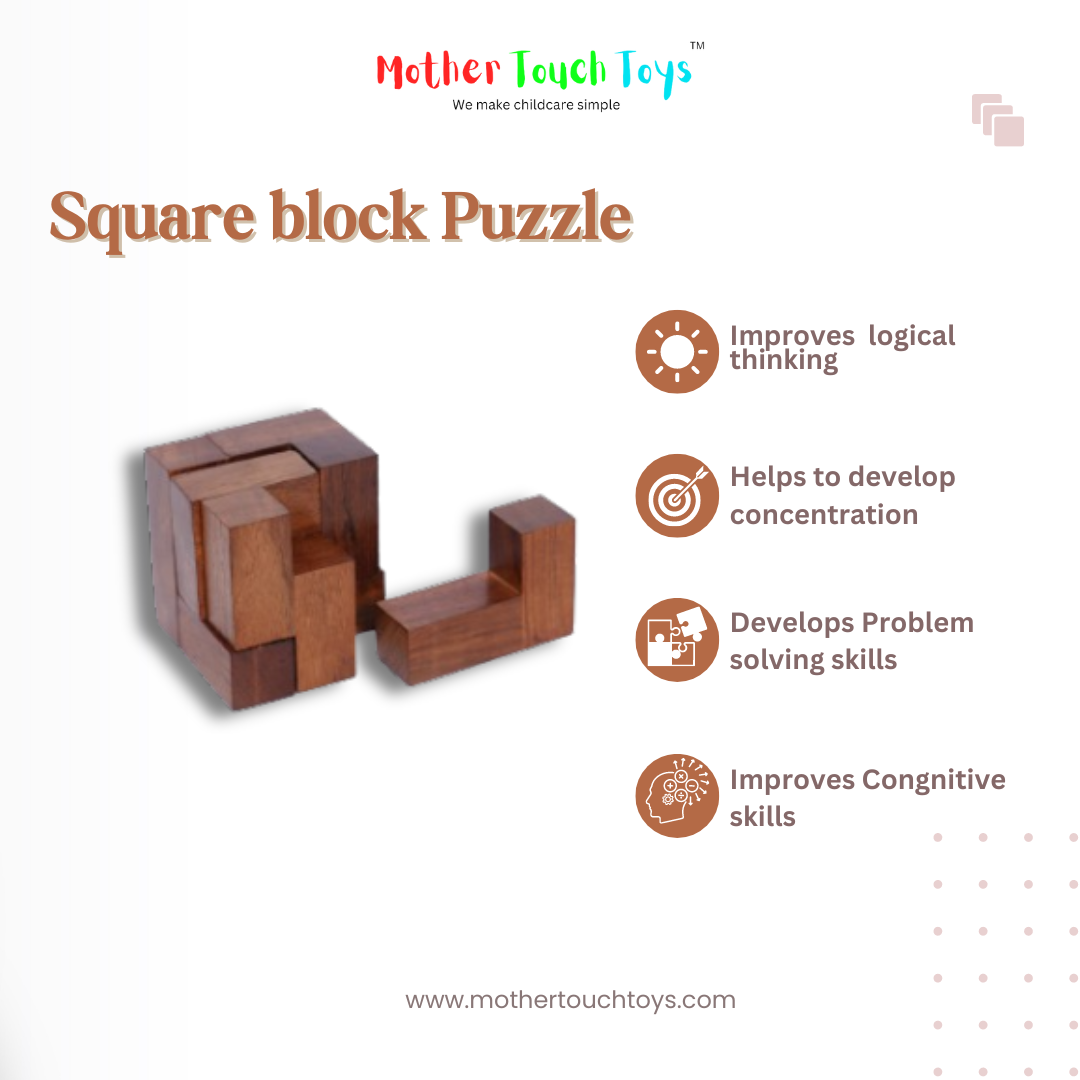
Square block jigsaw puzzle combines the familiarity of wooden blocks with the challenge of a jigsaw-style arrangement. Players need to understand how individual pieces fit together to create the completed square, making it an engaging activity for children, families and puzzle enthusiasts.
This square block jigsaw puzzle is not simply about putting pieces together quickly. Players need to observe the shape of each block, think about its possible position and consider how one placement affects the remaining spaces. When an arrangement does not work, the player can rearrange the pieces and try another approach.
How to Play
Place all the wooden blocks on a flat surface and examine their shapes. Start by experimenting with different combinations and look for ways to build the outer structure of the square.
Continue adding pieces while checking the overall shape. If you reach a point where the remaining pieces cannot fit, go back and rearrange an earlier section. Solving the puzzle is about discovering the correct combination rather than forcing pieces into place.
The square block jigsaw puzzle provides a fun opportunity to practise:
- Logical thinking
- Spatial reasoning
- Problem-solving
- Shape recognition
- Observation
- Concentration
- Planning
- Patience
- Fine motor coordination
- Visualisation
- A Hands-On Learning Activity
Block-based puzzles allow children to learn by physically moving and testing different possibilities. They can see the result of each decision immediately, making trial and error a natural part of the activity.
This makes the puzzle suitable for screen-free play at home, family puzzle sessions, classrooms and activity centres. Parents can also use it as a shared challenge where children explain their thinking and experiment with different solutions.
For Children & Adults
The square block jigsaw puzzle can appeal to children who enjoy building and arranging objects as well as adults who like compact wooden brain teasers. It is a practical choice for anyone looking for a puzzle that combines shape exploration with logical problem-solving.
Rather than focusing only on completing the puzzle, encourage players to enjoy the process: observe, plan, try, adjust and try again. Education When We Play is at the heart of this kind of hands-on puzzle experience.